
Using Moisture Mapping to Improve Greens Management
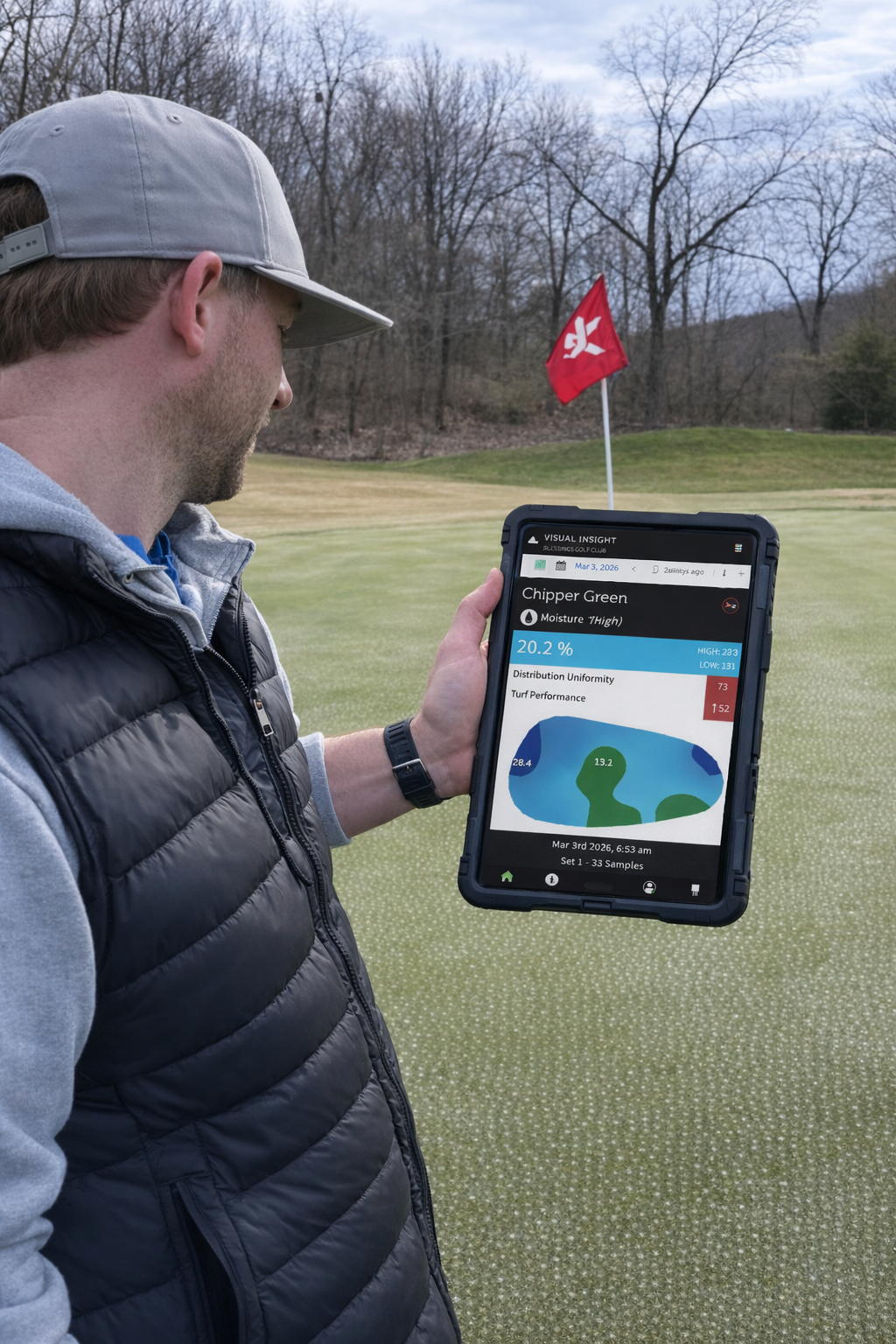
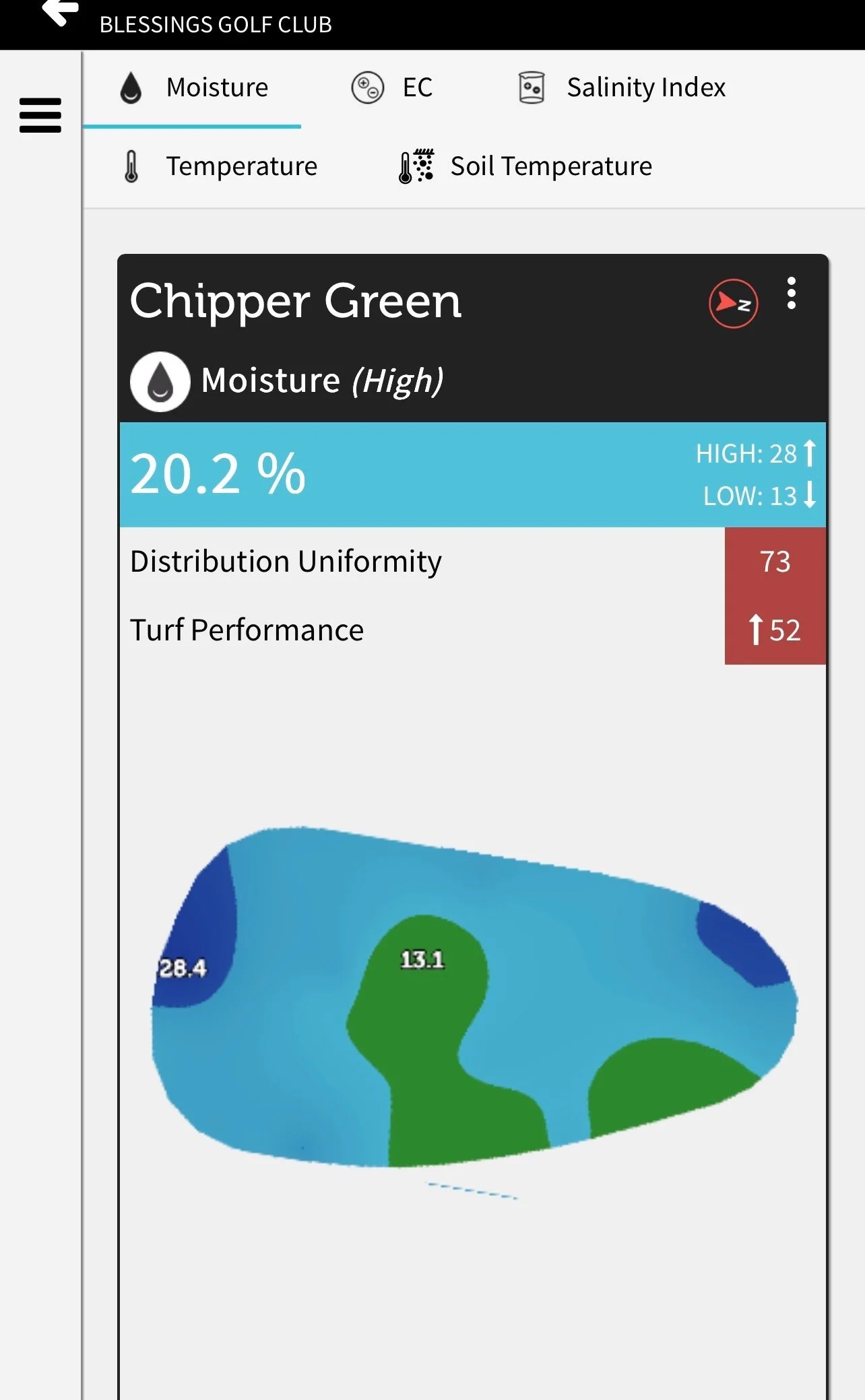
/Anyone managing bentgrass in the transition zone knows that moisture management can make or break greens during the summer. At our course we maintain about 4.5 acres of bentgrass greens, and keeping moisture levels consistent while still maintaining firm conditions is something we focus on every day. Our goal most days is to keep the greens as dry as possible while still protecting the plant. Over the past year we’ve started using a system that has helped us improve how we manage moisture across our greens. Like many courses, we previously relied on a handheld moisture meter to check conditions and guide hand watering. Recently we switched to using the Pogo Pro moisture sensor and mapping software from Pogo TurfPro, which allows us to map the entire green instead of just pulling a few individual readings. Each morning one of our assistants gets out ahead of course setup and maps every green with the Pogo unit. As he walks the surface taking readings, the sensor connects to his phone and the software builds a moisture map in real time. By the time he finishes, we have a clear visual showing how moisture is distributed across the putting surface. Our hand watering crew follows behind the setup team and can view those same maps on two iPads we keep with the water crew. With cell reception, the maps load immediately and show exactly where the dry areas are on each green. This has really helped tighten up our hand watering. Instead of watering larger areas just to be safe, we can target the specific spots that need moisture and leave the rest of the surface alone. Before switching to this system, we used a FieldScout TDR 350 moisture meter, which provided accurate point readings but didn’t always give a full picture of how moisture varied across the green. The mapping software makes it much easier to identify dry areas and communicate that information to the crew. Since implementing this process, we’ve been able to keep our greens slightly drier overall while still protecting localized stress areas, helping us maintain firmer and more consistent putting surfaces. In the transition zone, having better information about moisture distribution has been a big help. At the end of the day, it’s just another tool, but for us it has become a valuable part of our daily routine for managing greens moisture.
Miles Carlson Director of Agronomy Blessings Golf Club
Miles Carlson is the Director of Agronomy at Blessings Golf Club in Johnson Arkansas and is home to the University of Arkansas Men’s and Women’s golf teams. Miles and his staff recently became members of the Ozark Turf Association, an affiliated chapter of the Golf Course Superintendent Association of America